
The Renters’ Rights Act, which received Royal Assent in October 2025, will have a significant impact on both landlords and tenants in the future. The implementation date for the new Act is has been confirmed as 1 May 2026. There is a phased approach, the full details of which can be found on the Government website here.
The use of Section 21 notices, which enable private landlords to repossess their properties from assured shorthold tenants without having to establish fault on the part of the tenant, will be prohibited once the Renters’ Rights Bill is implemented, however, possession claims using the Section 21 process that are still going through the courts on 1 May 2026 will proceed as normal.
After 1 May 2026, the courts will still be able to process ongoing Section 21 possessions, but they must complete no later than 31 July 2026. After 31 July 2026, landlords will not be able to use the Section 21 process and must use the new grounds for possession.
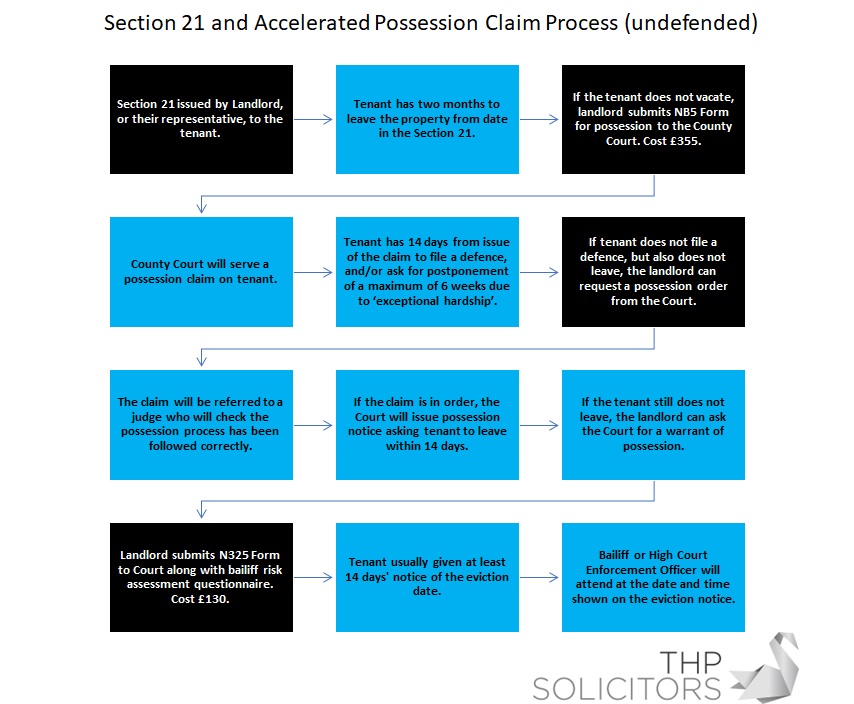
Landlord and tenant dispute solicitor, Laura Colebrook, talks through the Section 21 process as it currently stands and the steps a landlord must follow to repossess their residential property if they use the Section 21 ‘no fault’ process (not Section 8 which applies if a tenant has have broken the terms of the tenancy, for example in rent arrears).
Section 21 notice
A landlord can issue a Section 21 notice if their tenant has an assured shorthold tenancy, provided that it is not within the first four months of the tenancy or before a fixed term has ended. A landlord cannot serve a Section 21 notice to seek possession after the tenant has complained about the state of repair of the property – this is called a ‘retaliatory eviction’.
For a Section 21 notice to be valid, the landlord must have fulfilled various criteria during the tenancy including:
- If the tenant paid a deposit, the landlord must have paid it into one of the 3 approved Tenancy Deposit Schemes within 30 days of receiving the money and provided prescribed information to the tenant.
- The landlord must have provided the following to the tenant:
- a gas safety certificate dated no more than 12 months old (and this needs to be renewed annually)
- an energy performance certificate that is still valid at the time the S21 is served
- ‘How to Rent’ guide in hard copy or emailed if the tenant agreed to accept electronic documents.
The landlord should complete FORM 6A – Section 21 Notice and have proof of service. The tenant will have 2 months’ notice to vacate the property from the date they received the Section 21 notice.
If a tenant does not leave after a Section 21 notice has expired
If after the 2 months the Section 21 notice expires and the tenant has not left the property, the next step is for the landlord to apply to the court for possession. At this point the landlord has a choice of two routes:
- A standard possession order, which also enables the landlord to claim unpaid rent.
- An accelerated possession order but the landlord cannot claim rent arrears.
As in this scenario, as we are looking at a no-fault possession, we will continue down the accelerated possession route which is normally much quicker as it does not require a court hearing.
Accelerated possession order application
To make a claim for possession using the accelerated route, a landlord must:
- Correctly complete the 20-page Form N5B (three copies of this and the supporting documents below should be provided to the court)
- A copy of the Tenancy Agreement (current agreement and others if the landlord has granted more than one tenancy agreement to the same tenant at the same property).
- Section 21 notice and proof of service (such as a recorded delivery receipt).
- If the landlord does not have proof of service of the Section 21 they may need to complete a certificate of service (Form N215) or a witness statement to provide evidence of how the notice was served.
- Proof that a tenancy deposit has been registered in an authorised scheme.
- Copies of the gas safety certificates, EPCs and How to Rent guides provided to the tenant during their tenancy.
- Licence (or evidence that it’s been applied for) if the property is a HMO.
When the court gets the claim, the court will:
- Issue the claim
- Give it a claim number (the court’s reference number)
- Write to the landlord or their representative to confirm that the claim has been served and the date of service
- Send a copy of the claim to the tenant (with a date to respond by)
The tenant will have 14 days, from the date of service, to send a defence to the court. After the 14 days, the court will send the landlord either:
- a copy of the tenant’s defence (if any); or
- a form to fill in to ask the court to make a possession order (if the tenant sends no defence).
The landlord will have 3 months to fill in the form to ask the court to make a possession order. If they do not return the form to the court within 3 months, their claim will be put on hold.
If the tenant submits a defence
The tenant will have 14 days, from the date of service, to send a defence to the court. The court can also accept a defence if the tenant files it with the court after 14 days but before a landlord asks the court for a possession order.
In a defence, a tenant may put forward legal reasons why a possession order should not be made, a counterclaim, or ask for extra time to vacate due to ‘exceptional hardship’. Exceptional hardship is not defined in law.
If the tenant applies to postpone possession because of exceptional hardship and the court accepts this, the court may give the tenant up to 6 weeks to leave the property (instead of the usual 14 days). If the tenant has serious grounds for defence, the judge is likely to set a court hearing, after which he will decide on whether to award the possession order.
If the tenant does not submit a defence
If the tenant does not file a defence within 14 days, the landlord can make a written request for a possession order. Often a N206A Form will be included with the notice of issue from the courts which the landlord can complete and return to the court to request a possession order and ask the tenant to pay their costs. A judge will then consider the evidence in the landlord’s application.
The judge must make an outright order if they are satisfied that the landlord has followed the correct procedure and is entitled to possession. A court hearing is not usually required, and the tenant must leave the property by a specified date (usually within 14 days from the date of the possession order).
Apply for a warrant or writ of possession
If a possession order is granted by the court, but the tenant does not leave by the date specified in the order, the landlord can apply to the court for a warrant or writ of possession using a N325 Form along with bailiff risk assessment questionnaire. Cost £130.
Once this is processed, a county court bailiff or High Court Enforcement Officer (HCEO) will enforce the warrant or writ and carry out the eviction. The bailiff or HCEO must usually provide at least 14 days’ notice of the eviction date. The tenant can apply to court to temporarily stay a warrant of possession before the eviction is due to take place. The court can only stay the date for up to six weeks from the date of the original possession order. The tenant must show that they would experience exceptional hardship if the eviction is not delayed.
How we can help landlords and tenants with Section 21 notices
If a landlord makes any mistakes or omissions in either the service of the Section 21 notice or the application to court, the judge is likely to dismiss the application, which may mean they have to request a hearing or start the process all over again. That is why it is advisable to get a legal to advice on the strict procedure that needs to be followed to ensure the notice and any court claim is valid. If you are a landlord or a tenant and require advice and assistance with bringing or defending a claim for possession, please do not hesitate to contact Laura Colebrook on e: l.colebrook@thpsolicitors.co.uk or t: 0118 338 3270.
Disclaimer: This article is a general summary of the repossession process, following a specific set of circumstances, and does not attempt to cover all aspects of the law. No responsibility is taken by THP Solicitors for any action you take or refrain from taking in reliance of anything in this article and if you have a legal issue you should seek specific legal advice from a legal professional.